What is LVT Flooring? A Simple Guide to Pros, Cons, and Buying Tips
When it comes to remodeling, more and more homeowners are choosing LVT flooring. It looks like real hardwood or stone tile, but costs less, is 100% waterproof, and is highly durable. So, what exactly is LVT? Where is it best used? This simple guide covers everything you need to know before you buy.
What is LVT Flooring?
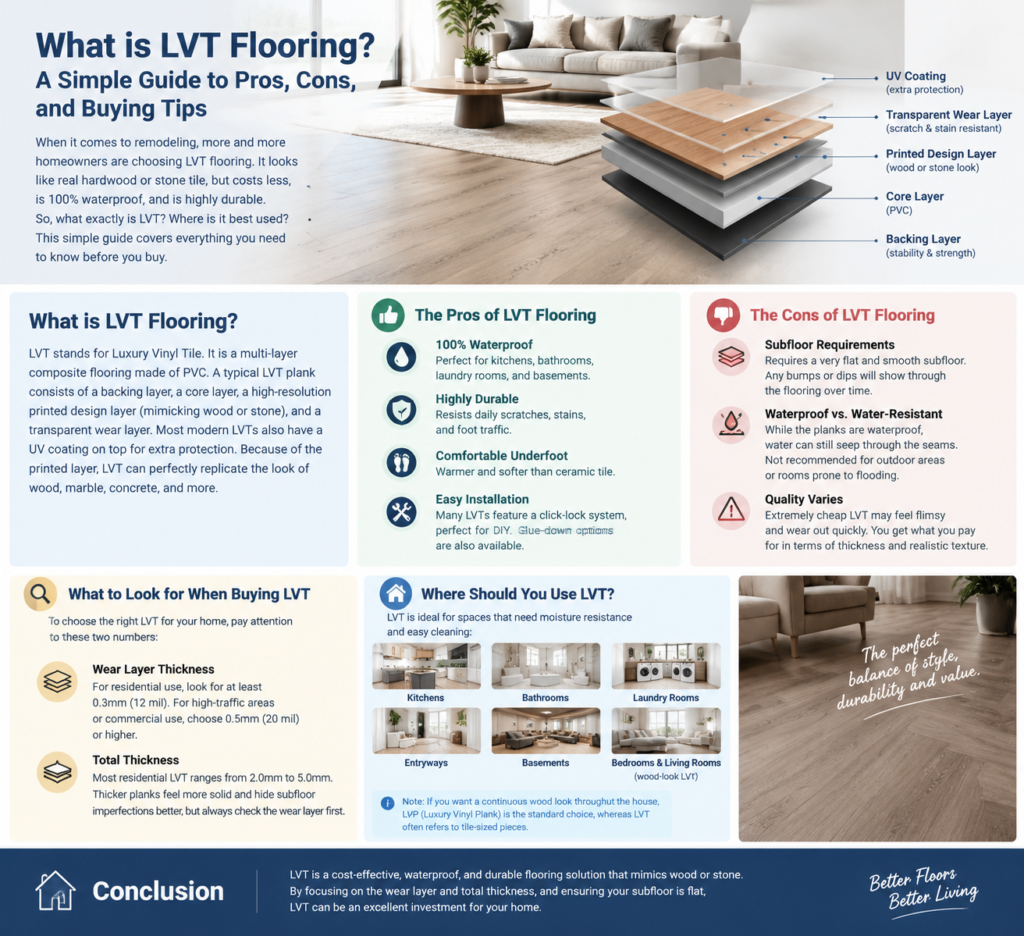
LVT stands for Luxury Vinyl Tile. It is a multi-layer composite flooring made of PVC. A typical LVT plank consists of a backing layer, a core layer, a high-resolution printed design layer (mimicking wood or stone), and a transparent wear layer. Most modern LVTs also have a UV coating on top for extra protection. Because of the printed layer, LVT can perfectly replicate the look of wood, marble, concrete, and more.
The Pros of LVT Flooring
100% Waterproof
LVT is completely waterproof at the plank level, making it perfect for kitchens, bathrooms, laundry rooms, and basements.
Highly Durable
The protective wear layer resists daily scratches, stains, and foot traffic.
Comfortable Underfoot
Compared to ceramic tile, LVT feels warmer and softer when you walk on it barefoot.
Easy Installation
Many LVTs feature a click-lock system, which is perfect for DIY installation. Glue-down options are also available for a more permanent fit.
The Cons of LVT Flooring
Subfloor Requirements
LVT requires a very flat and smooth subfloor. Any bumps or dips will show through the flooring over time, especially with click-lock planks.
Waterproof vs. Water-Resistant
While the planks are waterproof, water can still seep through the seams. It is not recommended for outdoor areas or rooms prone to flooding.
Quality Varies
Extremely cheap LVT may feel flimsy and wear out quickly. You get what you pay for in terms of thickness and realistic texture.
What to Look for When Buying LVT
To choose the right LVT for your home, pay attention to these two numbers:
Wear Layer Thickness
For residential use, look for at least 0.3mm (12 mil). For high-traffic areas or commercial use, choose 0.5mm (20 mil) or higher.
Total Thickness
Most residential LVT ranges from 2.0mm to 5.0mm. Thicker planks feel more solid and hide subfloor imperfections better, but always check the wear layer first.
Where Should You Use LVT?
LVT is ideal for spaces that need moisture resistance and easy cleaning: kitchens, bathrooms, laundry rooms, entryways, and basements. If you want the look of wood in your bedroom or living room without the maintenance, wood-look LVT is a great choice.
Conclusion:
LVT is a cost-effective, waterproof, and durable flooring solution that mimics wood or stone. By focusing on the wear layer and total thickness, and ensuring your subfloor is flat, LVT can be an excellent investment for your home.